
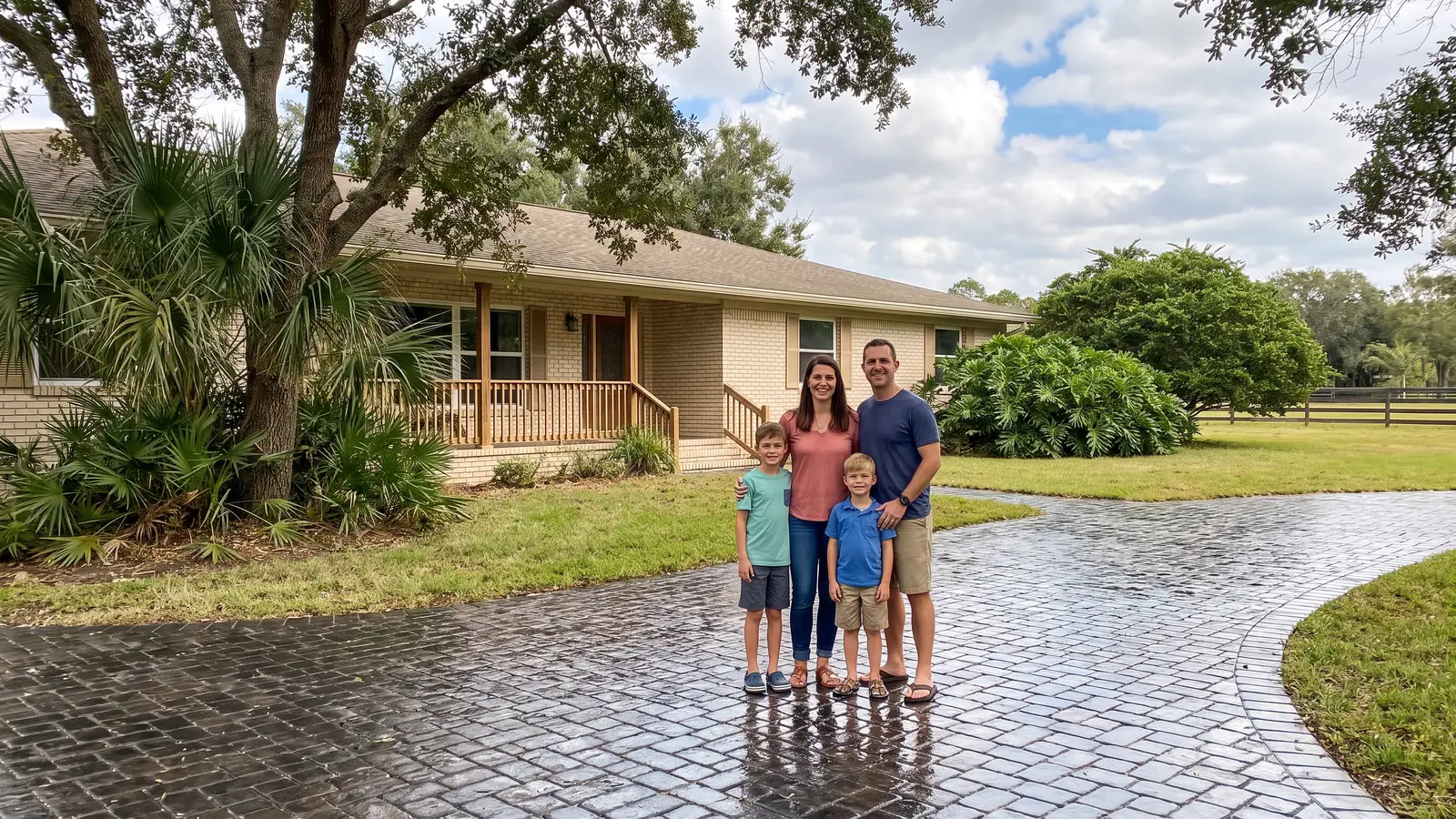
Paver sealing for Oceanway homes
Paver Sealing in Oceanway, FL
From Oceanway Manor to new builds off Yellow Bluff Road, call (904) 569-9619 for a free paver sealing estimate.
- Brings out deeper paver color
- Fresh joint sand helps lock pavers in place
- Gives weeds less room to grow
- Makes the surface easier to keep clean
- Free estimate, no obligation
Request a Free Estimate
Free, no obligation.
Fast, careful paver sealing in Oceanway
Oceanway pavers can be cleaned and sealed by a local contractor, from older Oceanway Manor streets to new builds near Yellow Bluff Road. Cleaning, sand and sealer are all part of the job, and the estimate is free. Use ask for a free estimate and you can expect an answer within 1 business day, usually much sooner.
Think of a driveway that still looks fine from the road but is thin on sand, with weeds in the seams and ants moving in. A wash, fresh sand and a new coat tighten it up and even out the color. If you would rather talk, call (904) 569-9619 and describe what you see.
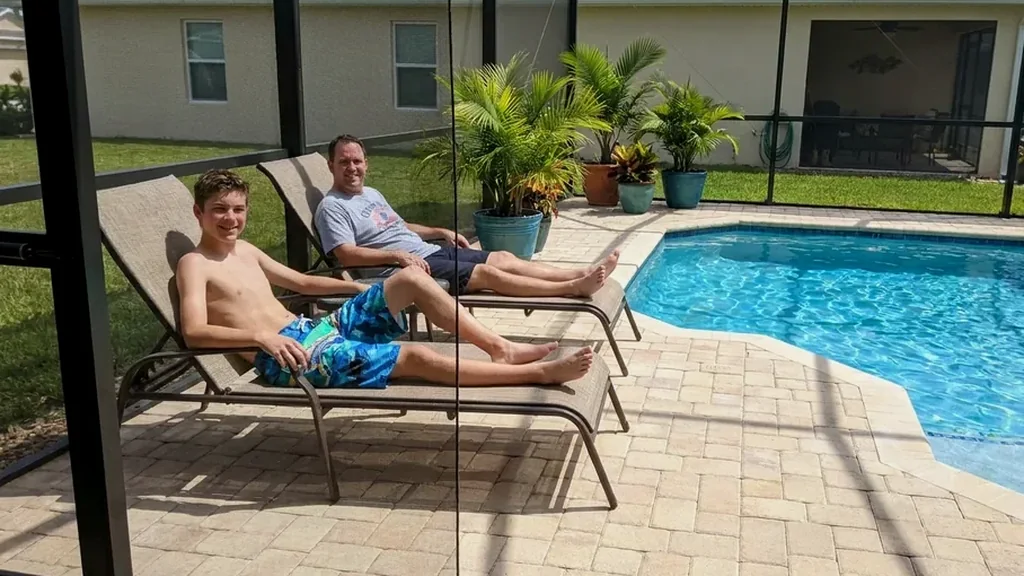
Why hire a local paver sealing contractor in Oceanway?
Oceanway went from farms to subdivisions in a few decades, so pavers here range from brand new to decades old. A local contractor can look at yours and say how old it is, so ask for a free estimate.
Price first, decision later
A contractor looks over your Oceanway driveway and patio and names a price. Nothing is owed, and saying no is fine.
Numbers you can check
Local companies list $1.75 to $3.25 per square foot to clean, sand and seal. Put your Oceanway bid next to that range.
Advice on brand-new pavers
Pavers laid in the past year may still show white haze. A contractor can say whether to wait out the 30 to 60 days.
A plan for wet lots
Some Oceanway streets have held water before. Say where it pools, and the wash and dry time will be set to match.
Get Your Free Estimate in Oceanway
Tell us about your pavers in Oceanway.
Free, no obligation
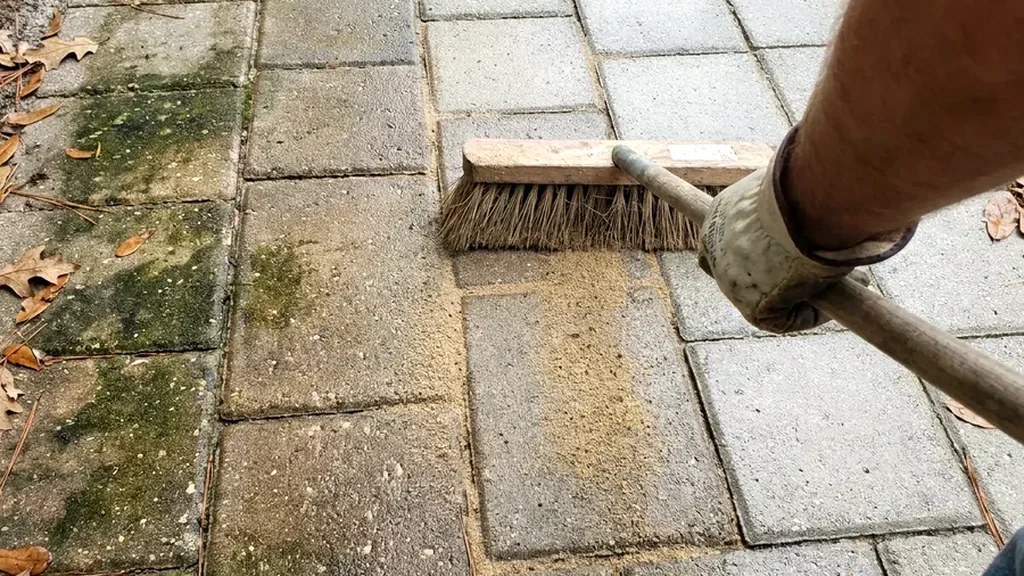
What paver problems show up most in Oceanway?
Standing water on poorly drained lots
According to News4Jax, every home on Blue Whale Way took on water during Hurricane Irma in 2017, and residents blamed poor drainage. The USDA describes the Mandarin soil series in Duval County as somewhat poorly drained fine sand with a water table 18 to 42 inches down. Water that sits on pavers leaves a dirt film and pulls out sand. Sealing waits until the surface is dry. Residents said they could not find a body of water behind the flooding, which points to drainage rather than a creek. If water pools on your driveway after a storm, mention it at the first visit. After the 2017 flooding, residents said rebuilding came first and better drainage second.
New pavers with white haze
The city approved 405 single-family homes in North Jacksonville from January 2025 to March 2026, so many Oceanway pavers are new. Efflorescence, a white mineral deposit, often shows up in the first or second season and fades with weathering. A Jacksonville company says to wait 30 to 60 days before a first coat. Sealing too early can trap moisture under the coat. If your pavers are only a season or two old, the haze is usually cosmetic. A contractor can tell you whether it is haze or a sign of something else. Pavers that are not yet sealed also fade in the sun, so the wait should not stretch for years.
Joint sand that summer storms flush out
Jacksonville gets about 52 inches of rain a year, most of it in brief, hard storms from May to September. Summer downpours flush sand from joints, and weeds appear where joints widen and soil settles in. Empty gaps invite ants as well. Sealing the joints after refilling them discourages both. A full joint also holds the pavers together under a car, which matters on a driveway that sees daily traffic. Refilling is part of every Oceanway job. Hurricane Irma in 2017 caused record flooding in Jacksonville, which is why drainage stays a worry on this side of town.
Older pavers on homes built from 1948 to 1999
Oceanway Manor goes back to 1958, with homes dating from 1948 through 1999. About 90 percent of homes in the ZIP are owner-occupied, so pavers have often passed through a few owners. An earlier owner may have used any product. Solvent-based sealer rules out a water-based coat on top, so the contractor checks what is there before choosing. Pavers that look washed out or feel rough are often past due. A contractor can also spot sealer that is peeling or patchy, which is a clue the old product needs attention first.
Sun, tires and rust on open driveways
A July day here tops out near 92 degrees, and a Jacksonville company says the sun fades unsealed concrete pavers noticeably within 3 to 5 years. Driveways also collect oil drips, tire marks and rust from irrigation water. A sealed surface keeps oil and dirt sitting on top instead of soaking in. Water that stops beading is the sign a fresh coat is due. A sealed driveway wipes up oil more easily, and sprinkler rust is treated before the coat goes on. Some stains need extra treatment to lighten. First Coast High School, built in 1990 around a paved courtyard, is a reminder of how much of this area went in during the same few decades.
Is paver sealing different in Oceanway Manor than on newer Oceanway streets?
Yes, Oceanway Manor dates to 1958, with single-family homes built from 1948 to 1999 and 1,121 to 2,103 square feet. Many of those homes run 1,121 to 2,103 square feet, so driveways tend to be modest. Its pavers are more likely to be old, sealed once or never, and in need of fresh sand. Share your street when you ask for a free estimate.
Newer streets are built on smaller lots. Council members say land transfers have raised the number of 60-foot lots in an area that once saw large ones, and one planned development behind Jake Road will have 50-foot lot widths. Smaller yards mean smaller patios, and small patios can run into minimum job sizes. Ask about that when you call (904) 569-9619.
The area still has rural pockets. Jake Road has mobile homes on acre-size lots, and the Daily Record calls North Jacksonville historically rural. A long driveway on a big lot takes more time than a short one, even at the same rate. Mention the size of your lot when you ask for a free estimate.
What does paver sealing cost in Oceanway?
Companies in the region publish a range of $1.75 to $3.25 per square foot for cleaning, sanding and sealing. A long open driveway spreads the prep over many square feet, while a compact patio on a 60-foot lot carries the same setup over fewer. Walkways and patios are measured together with the driveway. To see a number for your square footage, ask for a free estimate.
Sealer that has failed, sand that has washed out and sunken sections all add work. Prep time matters, since one Jacksonville company counts 2 to 3 hours of washing and repair for each hour of sealing. Standing water from drainage problems can also add drying days. Ask at (904) 569-9619 and the contractor can say which of these fit.
| Paved area | Typical example | Clean, sand and seal |
|---|---|---|
| 300 sq ft | Small patio or walkway | $525 to $975 |
| 600 sq ft | Two car driveway | $1,050 to $1,950 |
| 1,000 sq ft | Large driveway or pool deck | $1,750 to $3,250 |
| 1,500 sq ft | Driveway plus pool deck | $2,625 to $4,875 |
Math based on the $1.75 to $3.25 per square foot that Northeast Florida paver companies published as of November 2026. Your contractor sets the actual price after seeing the surface. Repairs, leveling and stripping failed sealer are usually extra.
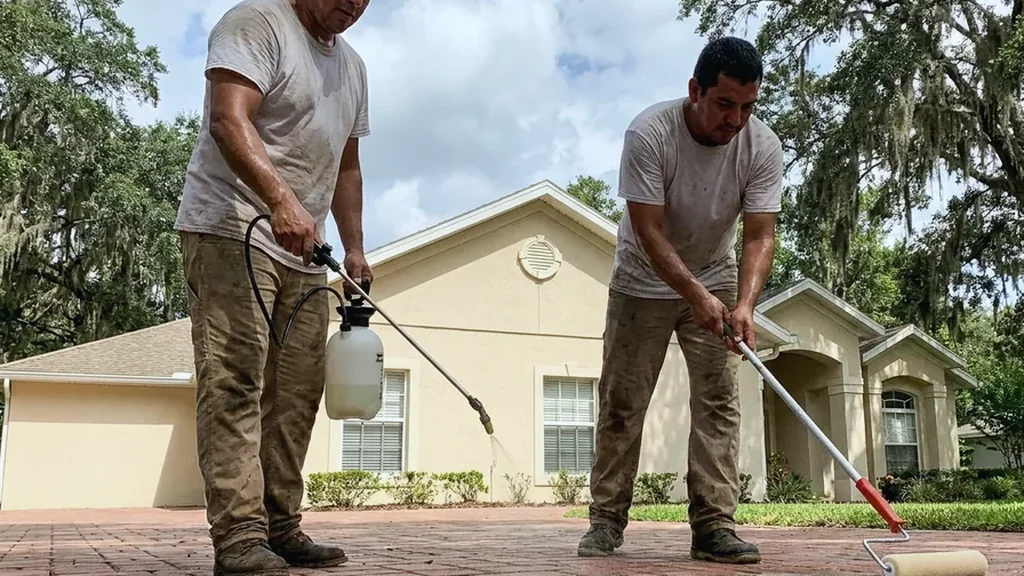
How does a paver sealing job work in Oceanway?
Check how water leaves your lot
The contractor looks at how water leaves your driveway and patio and where it stands after rain. Sunken spots and lifted edges get repaired first, since a coat locks in whatever is there. If the pavers are new, they check the age. If they are old, they look for earlier sealer. You hear a price after the visit, and you agree to nothing until then. A few phone photos of the worst spots speed things up. Ask the contractor to check the low end of the drive after a rain.
Wash off dirt film, oil and rust
Cleaning removes the dirt film, tire marks and oil. Rust from irrigation water gets treated at this stage too. Joint sand comes out with the wash, so it has to be replaced. Stains from deep oil or rust may stay faintly visible, so ask what to expect. Rinse water is kept off siding, screens and landscaping. The contractor tells you if a stain will not lighten fully.
Put the sand back, edges first
Fresh sand goes back in so the pavers lock together and weeds have no soil to root in. Sand that has washed out after summer storms is the main reason weeds and ants return. The joints are filled to the top and swept clean. Edges beside the curb and the garage door get extra sand, since that is where it escapes first.
Give the pavers time to dry
A Jacksonville page lists one to two days of drying after cleaning, and low spots near drainage swales take longer. Haze and blotches usually come from sealing over damp pavers. If the forecast shows rain within a day, the contractor moves the job. That wait costs less than redoing a cloudy coat.
Seal, then keep off until it cures
Then the coat goes on. Feet can return in a few hours, and wheels should stay off about a day. Professionally applied sealer typically lasts two to five years in Northeast Florida, though wear depends on traffic, sun, moisture and drainage. Wet look shows scuffs faster than matte, so a driveway with daily tires may suit satin or matte better. Ask when to plan the next coat.
Complete paver services in Oceanway
Here is how an Oceanway job unfolds. Repairs to dipped pavers come first, then the wash, then new sand, then a dry wait, and the coat goes on last. Skipping a stage shows up later as peeling or haze. To hear how long it would take at your house, call (904) 569-9619.
Oceanway jobs usually mean the drive, the path to the door and a patio out back. Newer homes on 60-foot lots often have a compact patio, while older Oceanway Manor lots may have a longer drive. Pick the surfaces you want done, then ask for a free estimate.
You choose the look. Wet look deepens color, matte stays natural, and penetrating sealer leaves the surface as it is. Switching finishes down the road means stripping first, so settle it before work starts. If you want help picking, call (904) 569-9619.
Rain sets the calendar. Storms from May to September can move a day, and sealer needs a dry surface, so the contractor watches the forecast. Standing water on a lot adds drying time. For a date that suits your street, ask for a free estimate.
Questions to ask before you hire
- Will the sealer leave a wet look or a flat natural finish, and can I choose?
- What happens if it rains within a day of the job?
- Will you tell me when the pavers should be sealed again?
- What does the estimate list besides the price?
- Will you test a small patch before you seal the whole driveway?
- How long does the surface need to dry before the sealer goes on?
- Who do I call if the sealer peels or turns cloudy after the job?
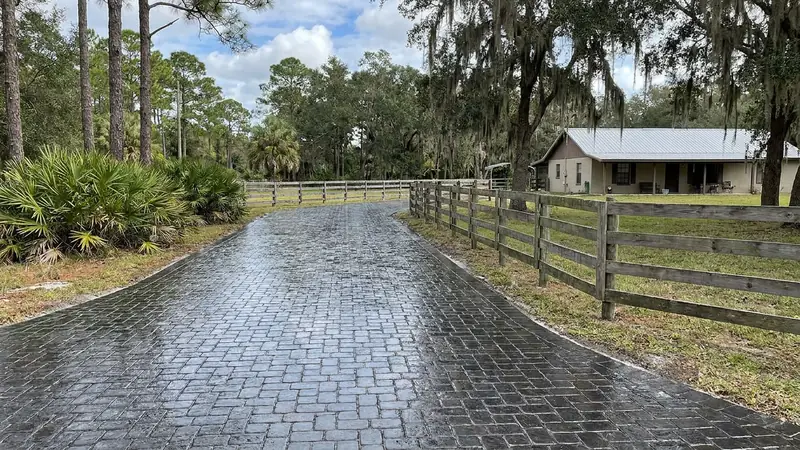
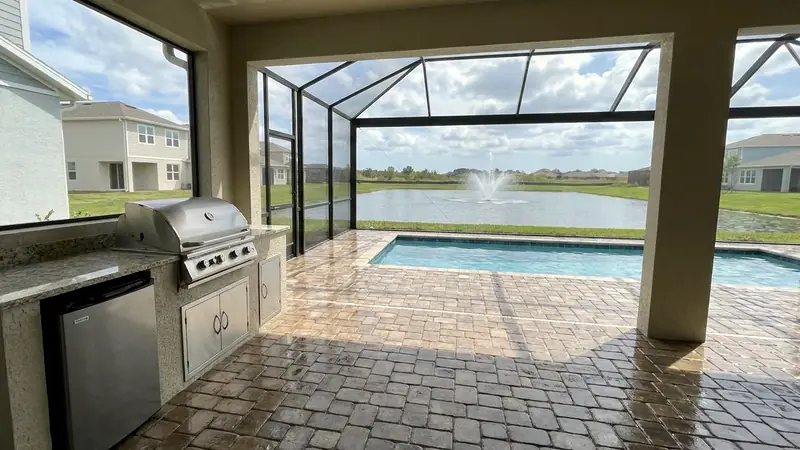
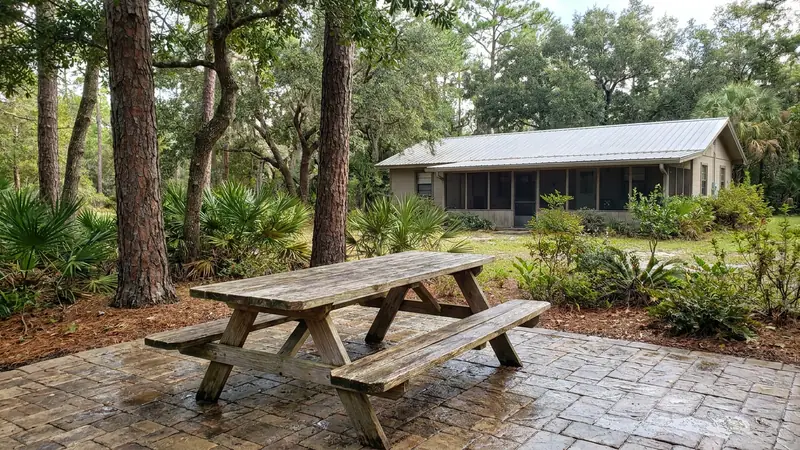
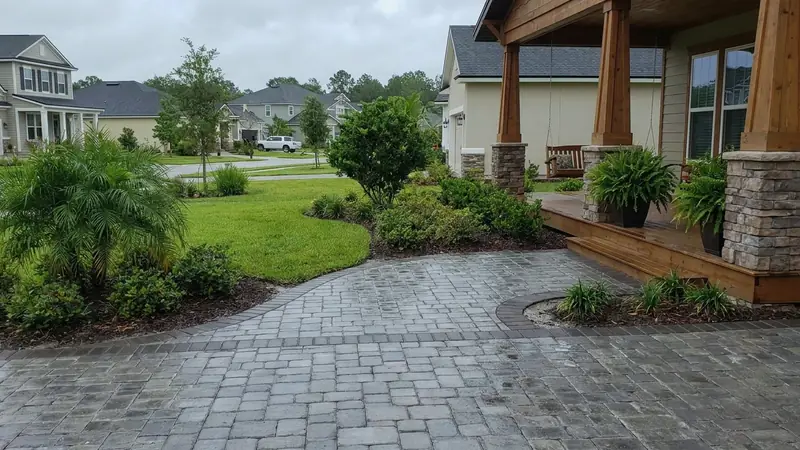
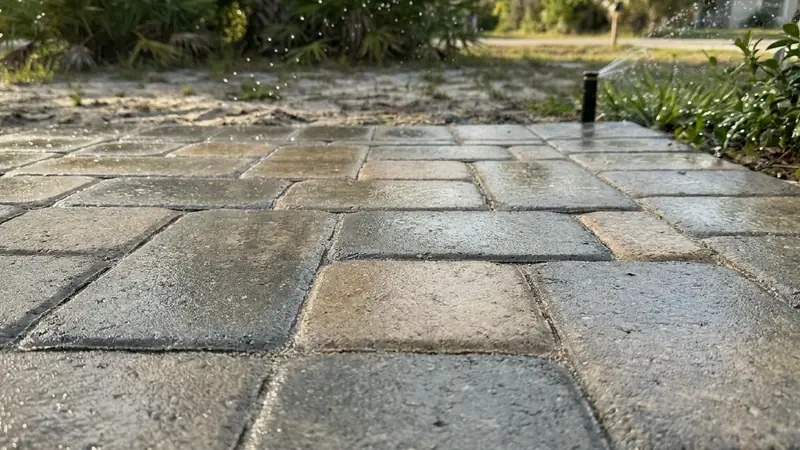
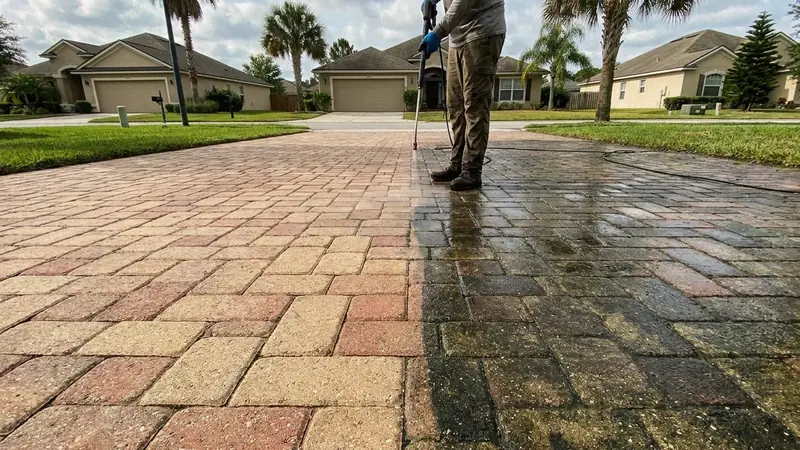
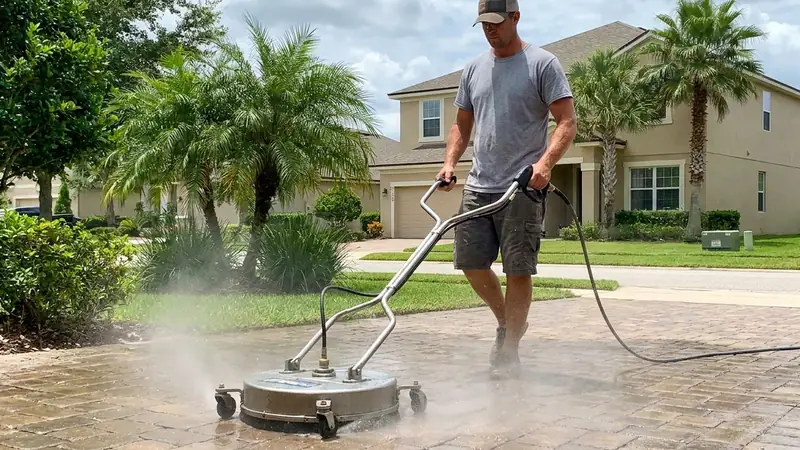
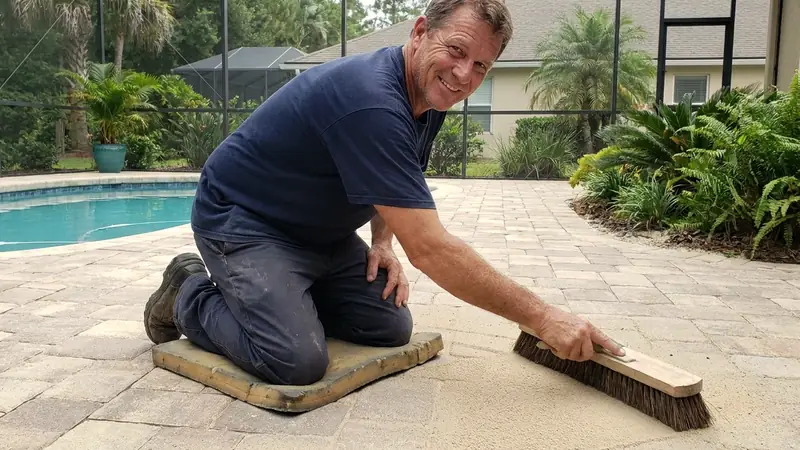
What do sealed pavers look like around Oceanway?
Why local matters in Oceanway
Oceanway changed fast, and a contractor on the Northside has watched it happen. Farms and isolated houses gave way to subdivisions, a high school in 1990 and River City Marketplace in 2006. One day can mean a 1950s ranch and a brand-new build. For a contractor who works the Northside, call (904) 569-9619 and ask about your street.
Water is the next concern. Blue Whale Way flooded during Irma in 2017, and residents blamed drainage, not a creek. A contractor who knows that history will ask where water stands on your lot. Mention any low spots when you ask for a free estimate.
Newer builds raise their own questions. With hundreds of homes approved in North Jacksonville since 2025, many pavers are young and may still show white haze. A contractor who has seen that can tell you whether to wait. If you moved in recently, ask for a free estimate and say when the pavers went in.
How did Oceanway grow from farmland into a neighborhood?
Wikipedia says Oceanway was once dotted with small farms and isolated houses, then grew sharply from the early 1980s. First Coast High School opened in 1990 around a large paved courtyard and added a wing in 2006 for the growth. River City Marketplace, with 125 acres, opened in November 2006 two miles east of the airport. If you live near one of these, call (904) 569-9619 and name your street.
History still shows at the edges. Yellow Bluff Fort Historic State Park on New Berlin Road holds a Confederate camp from 1862, and Pumpkin Hill Creek Preserve State Park lies to the north. The 46,000-acre Timucuan Preserve covers wetlands nearby. From any of these landmarks, you can ask for a free estimate and ask about your pavers.
Frequently Asked Questions
Is it good to seal pavers in Florida, and is Oceanway different?
Yes, usually. A Jacksonville company says unsealed concrete pavers fade noticeably within 3 to 5 years, and summer downpours flush sand from joints. A coat helps hold both on open Oceanway driveways. Later cleaning gets easier as well.
How long do paver sealers last in Oceanway?
Companies in Northeast Florida put a professional coat at two to five years. Wear depends on traffic, sun, moisture, drainage and upkeep, so there is no single number for every lot. Water that soaks in fast instead of beading means a fresh coat is due. Rain, shade and traffic can move the number either way.
Why is paver sealing so expensive in Oceanway?
Prep drives the price more than the sealer itself. Washing, new joint sand, repairs and stripping old sealer take time, and small patios price higher per square foot. Pool decks, walkways and driveways count together in one estimate. A long driveway adds hours of washing.
What is the average cost to seal pavers in Oceanway?
Companies in the region publish a range of $1.75 to $3.25 per square foot for cleaning, sanding and sealing. Strip-and-reseal runs higher if the old coat has failed. List the square footage in the quote so the number can be compared to that range. A few companies set the price only after inspecting the joints, so a first number is an estimate.
Is there a downside to sealing pavers in Oceanway?
There are two downsides, upkeep and timing. A coat wears and needs renewing, gloss scuffs show up sooner than matte, and rain can move your date because sealer needs a dry surface. Sealing too early on new pavers can also trap moisture. Peeling or patchy sealer is a clue the old product needs attention first.
Should I seal brand-new Oceanway pavers right away?
Usually not. White haze, called efflorescence, needs time to work its way out, and a Jacksonville company puts that at 30 to 60 days after installation. It often appears in the first or second season and fades with weathering. Ask the contractor to check your pavers before you spend money on a coat.
Can pavers be sealed after standing water or flooding?
Yes, as long as they are clean and fully dry first. A Jacksonville page lists one to two days of drying after cleaning. Flood or standing water leaves dirt and pulls out sand, so those are fixed first. Low spots near drainage swales can stay wet longer than the rest of the surface.
Does sealing stop weeds and ants in my paver joints?
It helps. Weeds appear where joints have widened and lost sand, and sealing the joints discourages ants and weeds. The joints need fresh sand first, since sealing over empty gaps would hold the gaps in place. Seams that are full and sealed are harder for weeds to rise through.
Nearby areas we serve
Ready for a Free Estimate in Oceanway?
Call (904) 569-9619 and tell us about your pavers.
Free, no obligation